
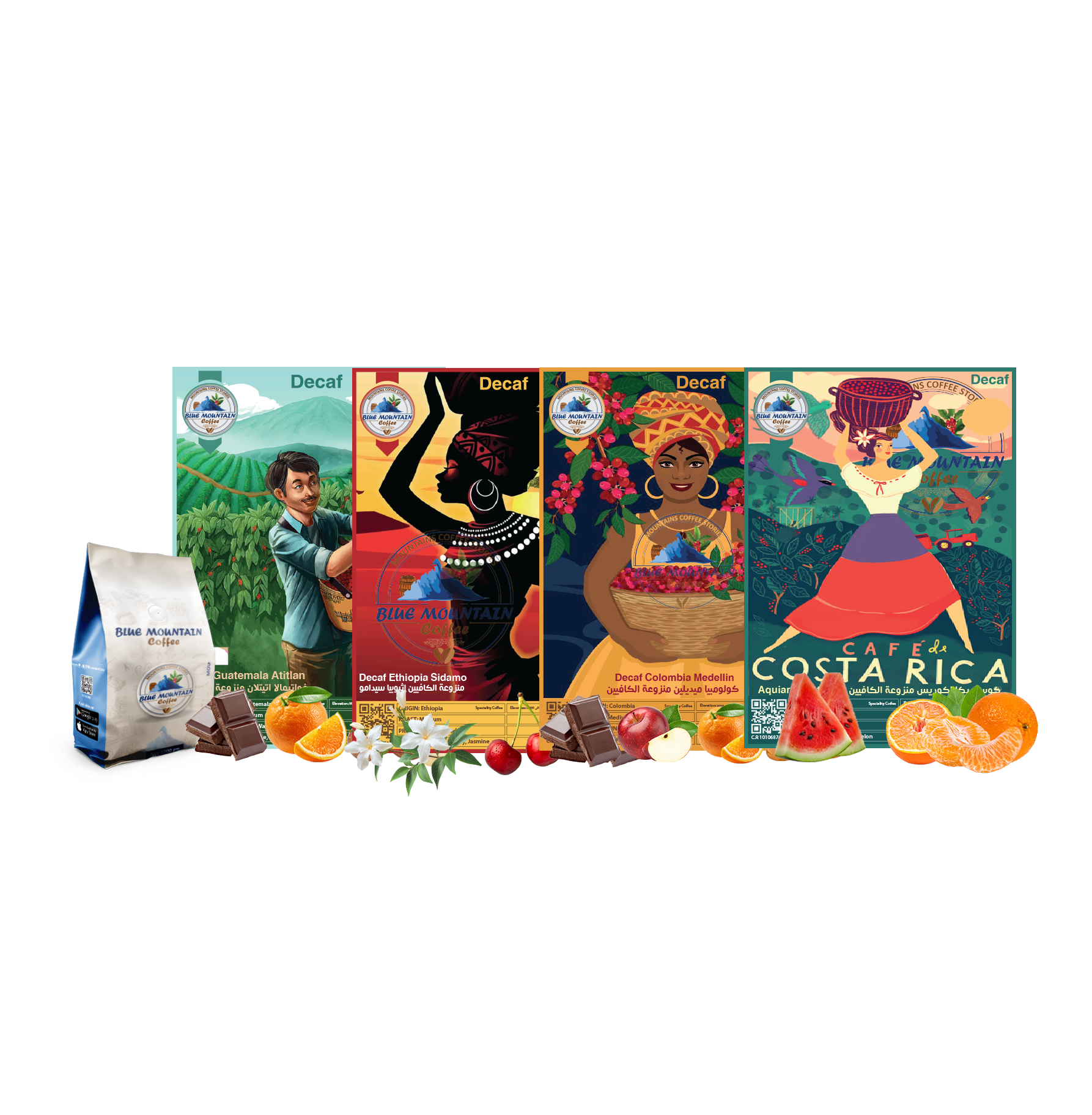
A set that includes four types of decaffeinated coffee:
1-Colombia Medellin decaffeinated roasted coffee
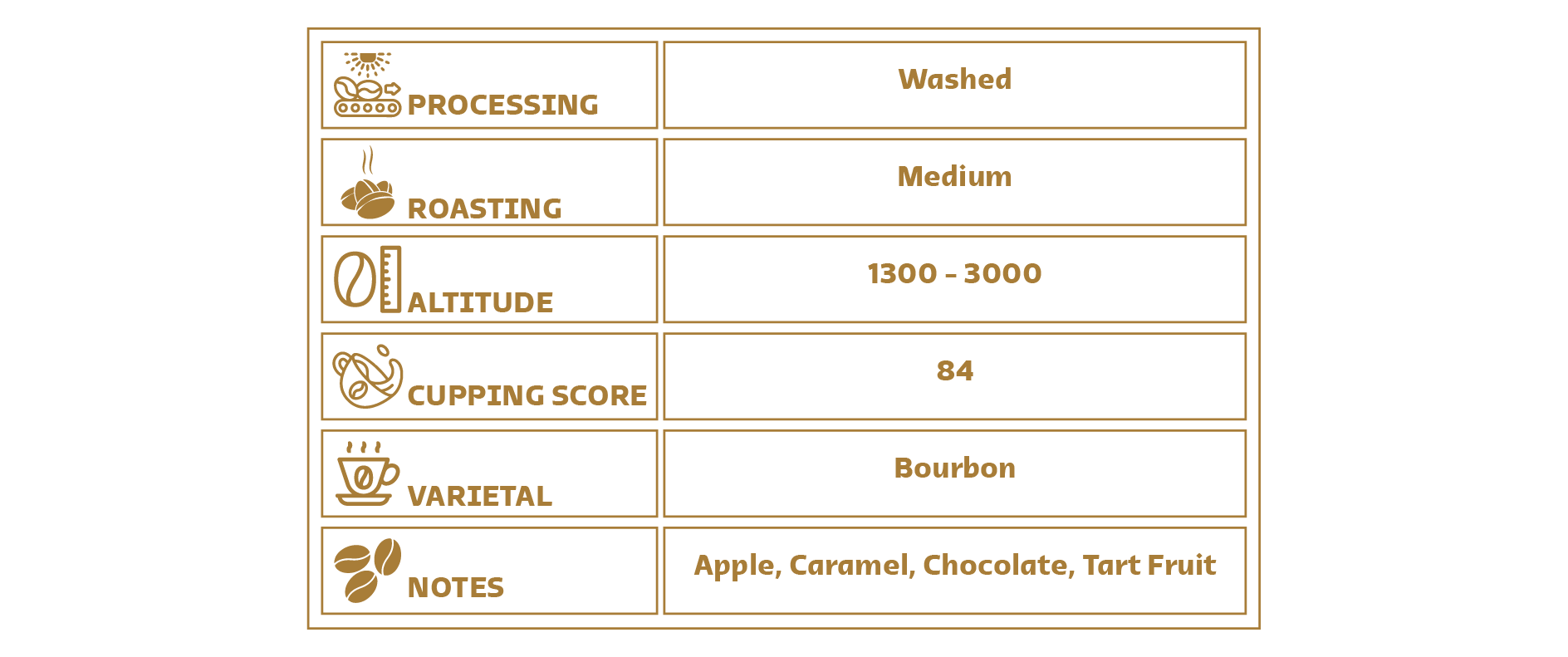
While there are quite a few different accounts of how coffee arrived in Colombia, most experts seem to agree that sometime in the early 18th century Jesuit priests brought the crop into the country. By the late 19th century, coffee had become fully commercial in Colombia, and in 1912 coffee made up around 50% of Colombia’s total exports. Colombia’s wonderful year-round climate and abundance of volcanic mountains made it the optimal geographic location for the plants to flourish. As these trees began to yield fruit, people began to harvest the cherries for their coffee beans, resulting in the delicious Colombian Coffee. During harvest, the beans undergo a slow maturation cycle, which directly results in a very flavorful and unique coffee .its famous for its smooth, pleasant acidity, smooth finish, nutty overtones, and rich medium to full body
2-Roasted Coffee Decaf Costa Rica Aquiares Estate
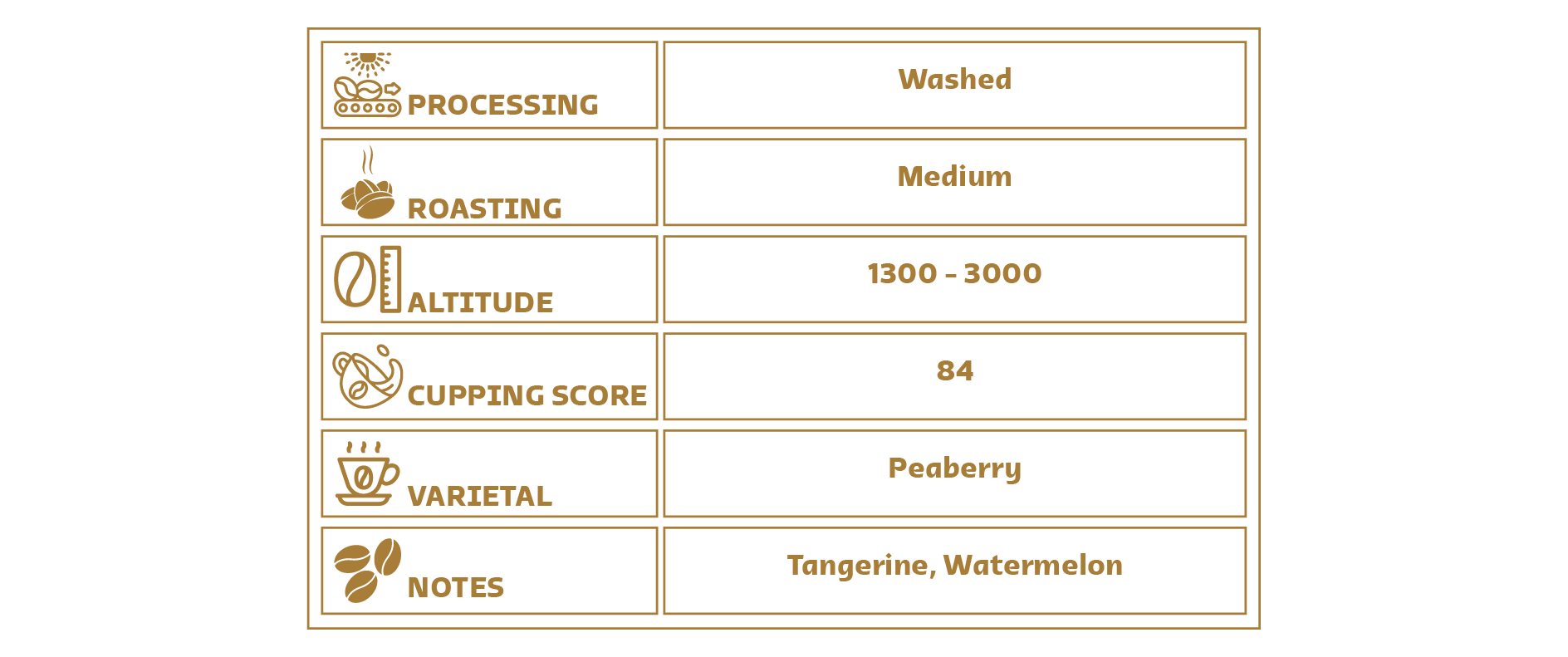
Costa Rica is the only country in the world where it is actually illegal to produce any type of coffee other than 100% Arabica—the highest quality of coffee beans. A law was passed in 1989 prohibiting the planting of low-quality beans, encouraging Costa Rican farmers to pursue true excellence. Arabica beans are a specific variety of beans that is more difficult to grow than other, hardier stocks. The result when the beans mature though is rich, full-bodied flavors leading to premium blends. In Costa Rica we take growing coffee seriously and so we only want to offer you the best. That’s why we only grow Arabica. When we say Costa Rican beans are picked by hand here’s what we mean: our heritage as gourmet coffee makers has taught us that the secret to the best brews is not to rush the process. So when we pick our coffee beans, only the ripest beans are plucked and processed. ts defining tasting notes include a brown-sugary sweetness, citrusy notes and apricot-like fruity flavors.
3-Roasted Coffee Decaf Guatemala Atitlan
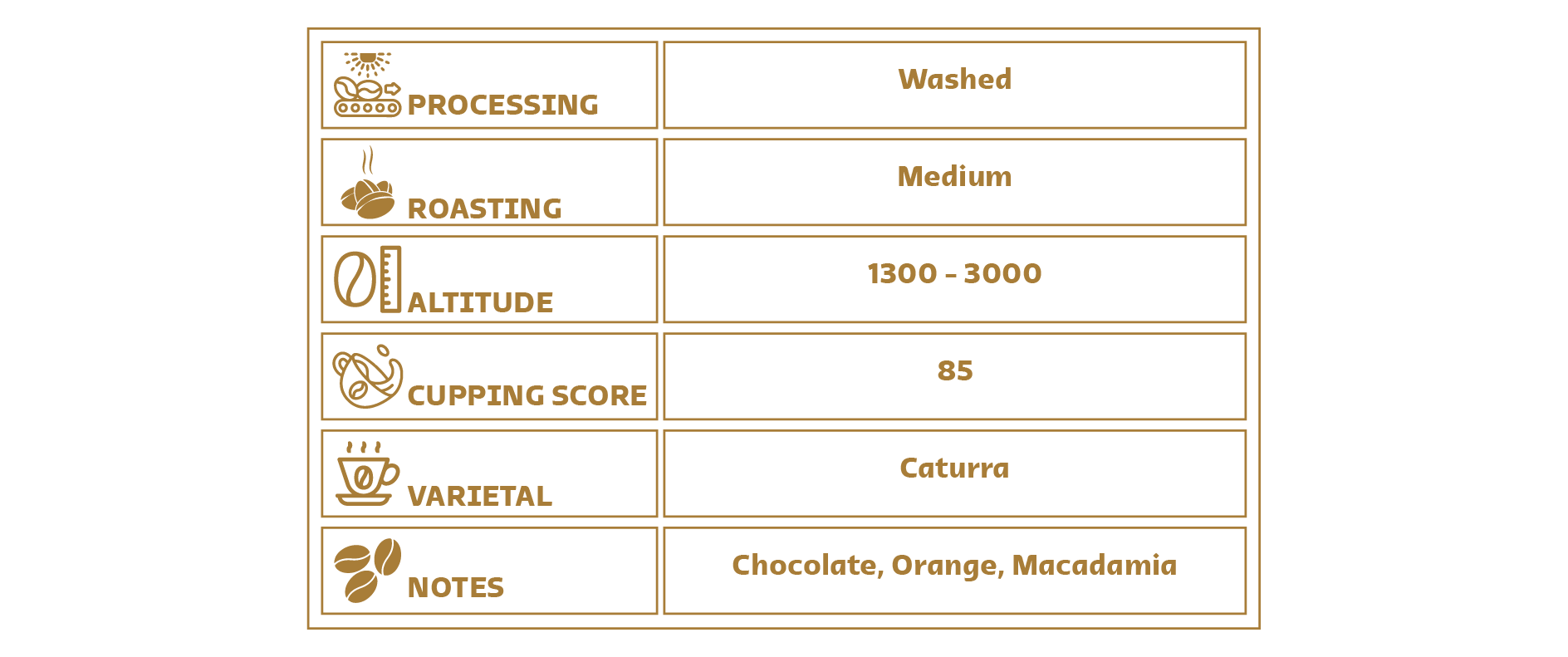
Guatemala boasts a variety of growing regions and conditions that produce spectacular coffees. Today, the country is revered as a producer of some of the most flavorful and nuanced cups worldwide. We are proud to work with several exceptional in-country partners to bring these coffees to market. The Guatemalan coffee industry experienced a major setback with the 2010 appearance of Coffee Leaf Rust (CLR) in Latin America. The epidemic peaked in severity in 2012, and though CLR continues to affect some farms, Guatemala continues to produce high-quality, record-breaking coffees. In 2017, new and varied processing methods pushed prices at the Guatemalan Cup of Excellence contest to record highs. The coffee is very balanced and round, yet at the same time complex in taste. When roasted lightly, it has a fruit acid with a dash of fresh pomelo; when roasted dark, chocolate and hazelnut come to the fore.
4-Roasted Coffee Decaf Ethiopia Sidamo
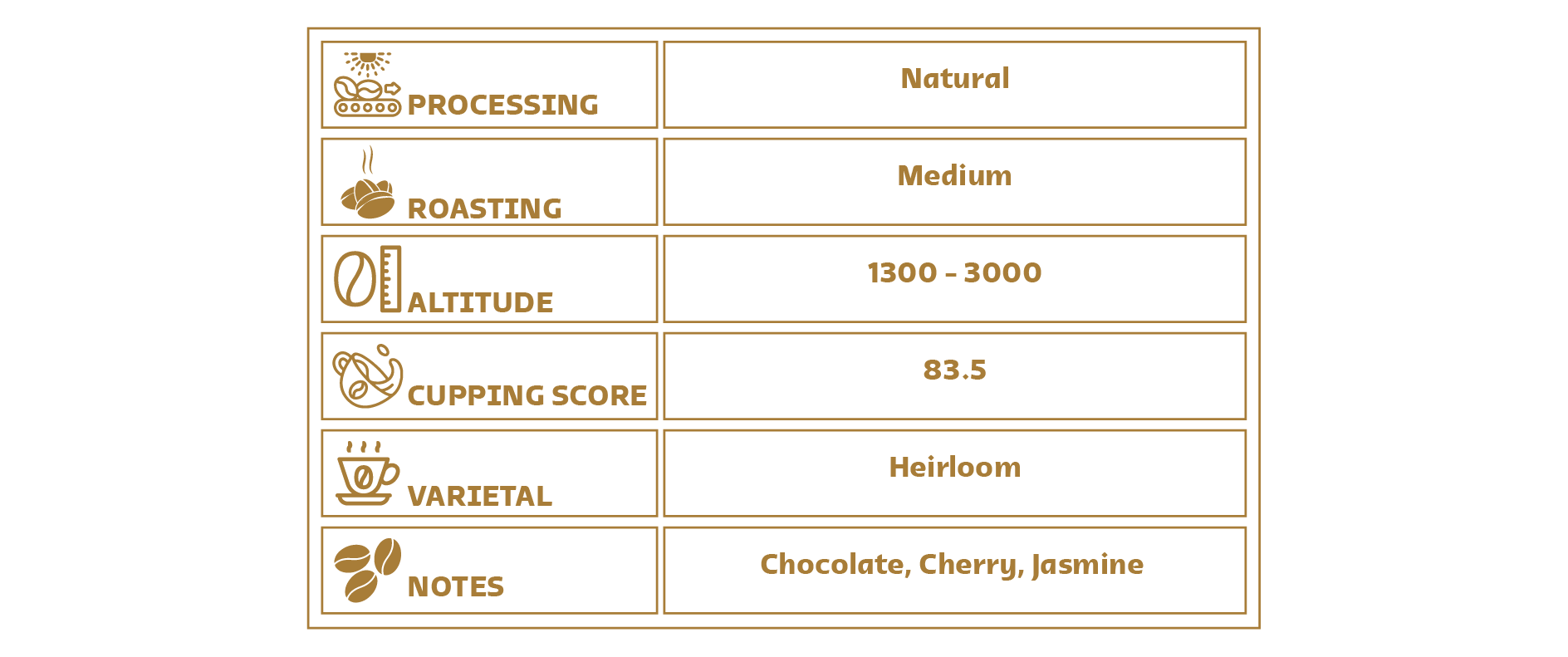
Sidamo is one of the most prolific growing regions in Ethiopia, putting out large volumes of consistently great coffee each year. Ethiopia’s Sidamo coffees are known for their rich body that is very complex along with a bright and vibrant , making this a staple Ethiopian coffee for any coffee roaster. Coffee is an important part of Ethiopian culture and is celebrated daily in the traditional Ethiopian Coffee Ceremony. A wet-processed (washed) Ethiopian coffee best known for its rich, full body (mouthfeel), sweet and complex flavor, low acidity, floral aroma,
How to withdraw caffeine:
The coffee beans are washed using the Swiss water method. This method removes caffeine from the beans by osmosis, where the beans are dipped in hot water and decaffeinated green coffee extract is added to them to pull the caffeine from the coffee beans until equilibrium is reached. It is then filtered with activated carbon, and the process is repeated until 99.9% of the caffeine is removed. This method is considered safer and healthier because it does not use any chemicals.